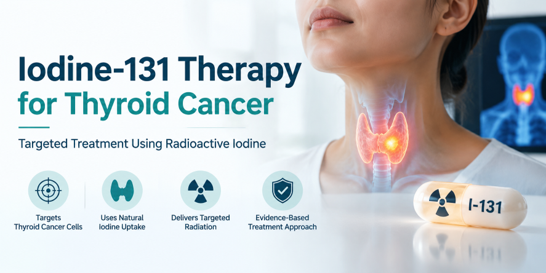
Thyroid cancer treatment needs more than just removing tumours since it also requires identifying and targeting the residual cancer cells. Iodine-131 therapy for thyroid cancer is an established nuclear medicine treatment whereby radioactive iodine is used to selectively target the thyroid cancer cells that absorb iodine. Unlike conventional radiations, radioiodine therapy works through the thyroid gland’s natural mechanism of taking up iodine to target iodine-avid tissue without exposing other healthy organs to radiation.
Dr. Gayana Shankaramurthy, a Nuclear Medicine & Theranostics Specialist in Bangalore, says, “Radioiodine treatment is the foundation of theranostic medicine, in which understanding the behaviour of cancer cells helps guide targeted treatment. Selecting appropriate patients, carefully assessing and personalizing the therapy are key to success.”
At World of Theranostics, Dr. Gayana Shankaramurthy offers specialized radionuclide therapies along with advanced molecular imaging. She specializes in I-131 therapy, PET/CT, SPECT/CT and targeted radionuclide treatments.
How can radioactive iodine specifically target thyroid cancer cells? Let’s explore how this specialised nuclear medicine treatment works.
What Is Iodine-131 Therapy for Thyroid Cancer?
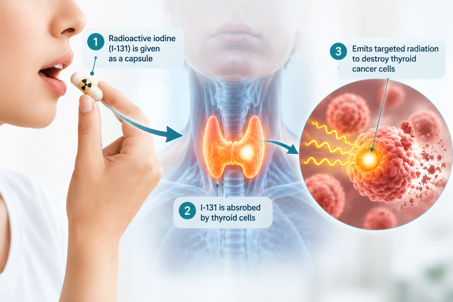
Iodine-131 therapy is one type of radionuclide therapy wherein radioactive iodine is administered orally in the form of a capsule or liquid. The thyroid gland naturally takes up iodine for the production of thyroid hormones and some thyroid cancer cells still have this ability.
Once administered, I-131 gets circulated in the bloodstream and accumulates in thyroid cancer cells that absorb iodine. Radiation generated by the radioisotope destroys the targeted cancer cells without much effect on other body cells.
This treatment is commonly used for differentiated thyroid cancers, such as most cases of papillary and follicular thyroid cancer. It can be considered after surgical removal of thyroid tissue to eliminate any residual cancer cells.
How Does Iodine-131 Therapy Work Against Thyroid Cancer Cells?
I-131 therapy works based on the natural process of iodine absorption by thyroid cells.
- Oral Administration: The radioiodine is ingested in the form of a pill or a solution.
- Selective Uptake: The residual thyroid tissue and iodine-avid cancer cells absorb the iodine.
- Targeted Radiation: The emitted beta radiation destroys cancer cells and makes them incapable of survival.
- Post-Treatment Monitoring: Imaging and blood tests are used to assess the effectiveness of treatment.
This approach forms the foundation of molecular therapy in nuclear medicine, where treatment is guided by how cells behave biologically rather than only by their physical appearance.
Targeted therapies require careful planning for maximum benefit. Get in touch to discuss whether I-131 therapy may be appropriate.
Does surgery always remove every thyroid cancer cell? Let’s discuss why additional treatment may sometimes be considered.
Why Is Iodine-131 Therapy Important After Thyroid Cancer Surgery?
Thyroid surgery removes the primary tumour and thyroid gland, but microscopic thyroid tissue or cancer cells may remain in some patients. I-131 therapy can help eliminate remaining iodine-absorbing thyroid tissue after surgery.
It may help:
- Destroy residual thyroid tissue
- Treat iodine-avid cancer deposits
- Support follow-up monitoring through thyroglobulin levels
- Reduce the risk of recurrence in selected patients
The decision depends on factors such as tumour characteristics, pathology findings, risk category and evidence of residual disease. Guidelines recommend individualised decision-making rather than using radioiodine therapy for every thyroid cancer patient.
Can every thyroid cancer patient receive radioiodine therapy? Let’s explore which cancers may benefit from this treatment.
Which Types of Thyroid Cancer Can Be Treated with Iodine-131?
I-131 therapy is mainly used for differentiated thyroid cancers, including:
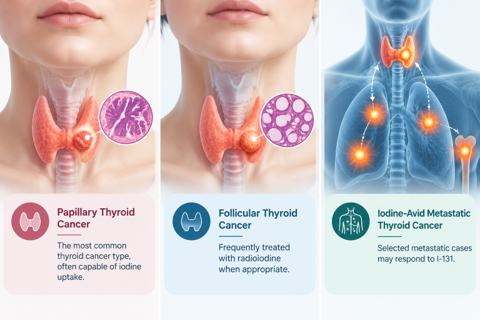
However, thyroid cancers that do not absorb iodine may require other treatment approaches, including targeted therapies or alternative radionuclide strategies.
Why is I-131 considered an important part of thyroid cancer care? Let’s discover its role in precision treatment.
What Are the Benefits of Iodine-131 Therapy in Thyroid Cancer Treatment?
Key benefits include:
- Targeted Treatment: Delivers radiation mainly to iodine-absorbing cells.
- Minimally Invasive Approach: Administered orally without surgery.
- Whole-Body Assessment: Post-treatment scans may help identify iodine-avid disease areas.
- Personalised Planning: Treatment decisions are based on disease characteristics, blood tests and diagnostic scans as required.
- Long-Term Monitoring Support: Thyroglobulin testing and imaging can help track disease status.
I-131 therapy represents one of the earliest examples of theranostics, where the same biological pathway helps identify and treat disease.
What happens during an I-131 treatment session? Let’s walk through the treatment journey.
How Is Iodine-131 Therapy Performed in Nuclear Medicine?
The process generally includes:
- Clinical Assessment: Review of pathology reports, blood tests and previous treatments.
- Preparation Phase: Patients may require thyroid hormone adjustments or a low-iodine diet based on the treatment plan.
- Planning phase: Plan for treatment based on appropriate blood test results and diagnostic scans.
- Radioiodine Administration: The prescribed I-131 dose is given orally.
- Radiation Safety Guidance: Patients receive instructions to reduce unnecessary radiation exposure to others.
- Follow-Up Imaging: Post-therapy scans may help evaluate iodine distribution.
Treatment is performed in specialised nuclear medicine facilities with trained professionals and radiation safety protocols.
How can patients prepare for a smoother treatment experience? Let’s discuss the important steps before and after therapy.
What Should Patients Expect Before and After Iodine-131 Therapy?
Before treatment, patients may undergo:
- Thyroid function testing
- Thyroglobulin and antithyroglobulin assessment
- Review of surgical and pathology reports
- Preparation instructions from the nuclear medicine team
After therapy, patients may receive guidance regarding:
- Maintaining hydration
- Following radiation safety precautions
- Monitoring symptoms
- Attending follow-up appointments
The exact instructions depend on the administered dose and individual treatment plan.
Is radioiodine therapy safe? Let’s discuss the precautions involved.
Are There Any Side Effects or Safety Precautions During Iodine-131 Therapy?
I-131 therapy is generally well established, but some patients may experience temporary effects such as:
- Dry mouth or salivary gland discomfort
- Taste changes
- Neck tenderness
- Fatigue
- Temporary changes in blood counts at higher doses
Radiation safety instructions are provided to reduce exposure to family members and others after treatment. The nuclear medicine team determines precautions based on the administered dose and individual circumstances.
Why Choose World of Theranostics for Iodine-131 Therapy and Thyroid Cancer Care?
- 15+ Years of Nuclear Medicine Expertise:
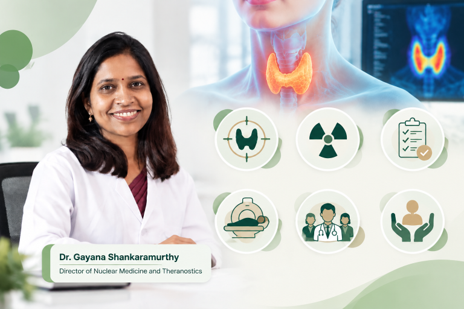
Led by Dr. Gayana Shankaramurthy, Director of Nuclear Medicine and Theranostics, with extensive experience in molecular imaging and targeted radionuclide therapies.
- Advanced I-131 Therapy Planning:
Personalised radioiodine treatment plans are developed based on pathology reports, imaging findings, thyroid function tests and individual risk factors.
Dr. Gayana Shankaramurthy has interpreted over 40,000 PET/CT scans, supporting accurate evaluation of complex cancer cases.
- 45,000+ Gamma Camera Studies:
Extensive experience in nuclear medicine imaging helps provide comprehensive disease assessment.
- 1000+ Theranostic Treatments:
Expertise in delivering advanced radionuclide therapies, including I-131 therapy and other targeted molecular treatments.
- Comprehensive Nuclear Medicine Services:
Access to PET/CT, SPECT/CT, nuclear cardiology and advanced molecular imaging under one specialised centre.
- Evidence-Based Clinical Care:
Treatment decisions are supported by scientific evidence, clinical expertise and multidisciplinary collaboration.
- Radiation Safety Focus:
Therapy planning includes appropriate safety measures, monitoring and patient education throughout the treatment journey.
A specialised approach can make thyroid cancer treatment more personalised and organised. Get in touch for guidance on I-131 therapy and thyroid cancer care.
Frequently Asked Questions
1. What is Iodine-131 Therapy for Thyroid Cancer?
It is a nuclear medicine treatment that uses radioactive iodine to target and destroy iodine-absorbing thyroid cancer cells.
2. Who needs Iodine-131 therapy after thyroid surgery?
It depends — patients with differentiated thyroid cancer might need it based on tumour risk, pathology results, and whether any disease is still present.
3. What is a low iodine diet before I-131 therapy?
It is a temporary diet plan that reduces iodine intake to improve radioactive iodine absorption by target cells.
4. Can thyroid cancer come back after I-131 therapy?
It can, in some cases — which is the whole reason long-term follow-up matters so much.
5. Can I-131 therapy treat thyroid cancer spread?
In certain cases, yes. Metastatic thyroid cancer that’s iodine-avid can respond to radioiodine treatment.
Reference links:
https://jnm.snmjournals.org/content/53/10/1633
https://pubmed.ncbi.nlm.nih.gov/38772827/
Disclaimer: The information shared in this content is for educational purposes and not for promotional use.