
Theranostics in NET
Precision PRRT treatment targeting somatostatin receptor–positive NET tumors
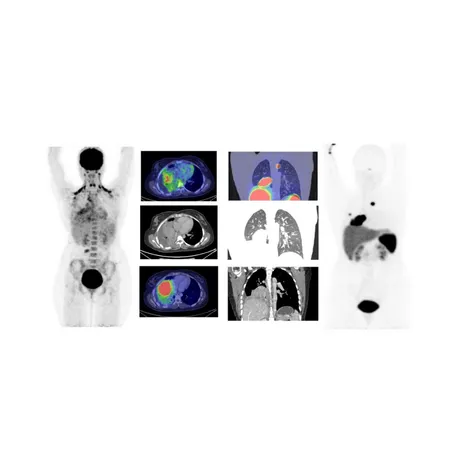
Lutetium-177 DOTATATE Therapy (PRRT) for Well-Differentiated Neuroendocrine Tumors
Peptide Receptor Radionuclide Therapy (PRRT) with Lutetium-177 DOTATATE is a form of targeted theranostic therapy that delivers radiation directly into neuroendocrine tumor (NET) cells expressing somatostatin receptors (SSTRs). It combines precision imaging with therapeutic radiation, offering durable disease control with limited systemic toxicity.
Why Lu-177 Therapy in Well-Differentiated Endocrine Tumors?
NETs are a heterogeneous group of tumors that often overexpress somatostatin receptors, especially SSTR2. This feature enables:
Theranostic Targeting: Diagnostic imaging with Ga-68 DOTATATE PET/CT identifies SSTR+ disease with high sensitivity
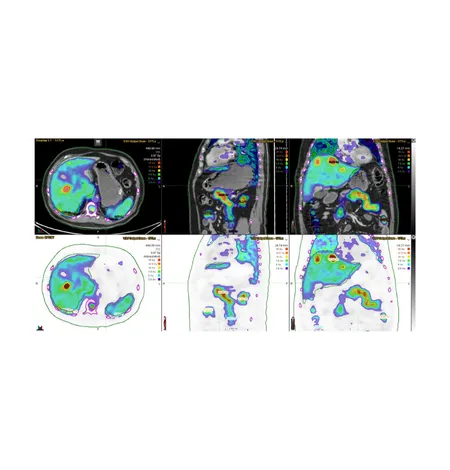
Theranostic Targeting: Therapeutic targeting with Lutetium-177 DOTATATE delivers beta radiation directly to tumor cells while sparing most normal tissues.
Mechanism: Lutetium-177 emits beta particles, causing DNA damage that leads to tumor cell death
Mechanism: Paired with somatostatin analogs (e.g., octreotide), this therapy enhances delivery and retention of the radiopeptide within NET lesions.
Clinical Benefits: Improved progression-free survival (PFS), Higher objective response rates (ORR), Symptom control and quality of life improvements compared with standard therapies in SSTR-positive tumors
NETPET Score
Choosing a patient for Lu-177 DOTATATE therapy
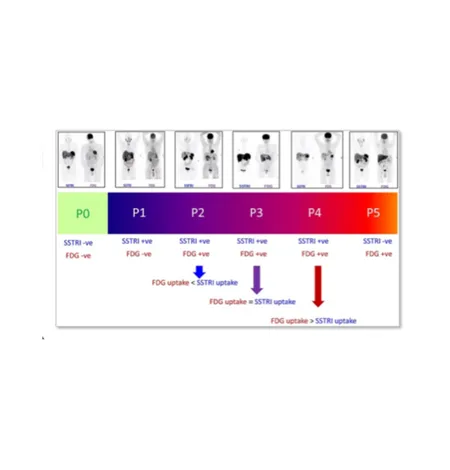
The NETPET score is a PET-based composite imaging score that integrates: Somatostatin receptor PET (Ga-68 DOTATATE) and FDG PET (glucose metabolism)
Purpose- It helps stratify prognosis by combining: SSTR expression (favorable biology) and Metabolic aggressiveness (FDG uptake; unfavorable biology)
Utility- High SSTR+/low FDG uptake -better outcomes with PRRT and High FDG uptake – may indicate more aggressive disease requiring alternative or combination treatments
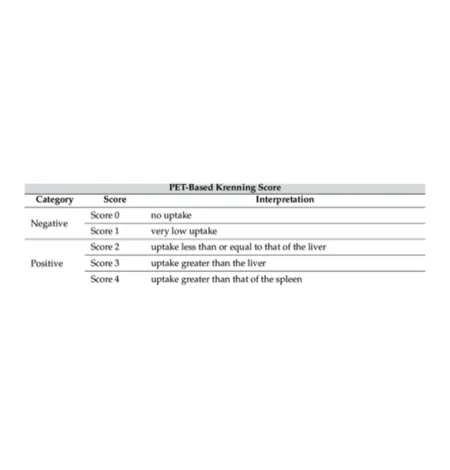
Krenning Score
The Krenning score is a semiquantitative grading of somatostatin receptor density on imaging.
Landmark Clinical Trials in Lu-177 DOTATATE Therapy- NETTER-1 Trial: DOI: 10.1056/NEJMoa1607427
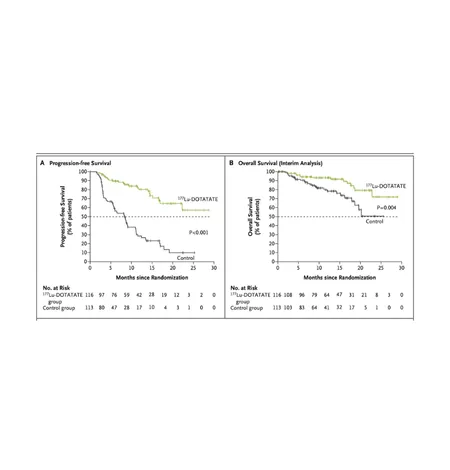
NETTER-1 is the pivotal phase III randomized trial that established Lutetium-177 DOTATATE as a standard therapy for advanced gastroenteropancreatic NETs.
Population: Well-differentiated, metastatic midgut NETs progressing on somatostatin analogs
Intervention: Lu-177 DOTATATE plus long-acting octreotide
Control: High-dose octreotide alone
Primary Endpoint: Progression-free survival (PFS)
Key Results: 20-month PFS rate: nearly 65.2 percent in the Lu-177 arm vs nearly 10.8 percent in control, Higher response rates: 18 percent vs 3 percent (Lu-177 vs control), and Trend toward OS benefit and excellent safety profile.
NETTER-2 Trial: https://doi.org/10.1016/S0140-6736(24)00701-3
A subsequent phase III randomized study evaluated Lutetium-177 DOTATATE as first-line therapy in higher-grade (Grade 2–3) well-differentiated gastroenteropancreatic NETs.
Primary Outcome: Progression-Free Survival (PFS)
Median PFS nearly 22.8 months with Lutetium-177-DOTATATE plus octreotide, versus nearly 8.5 months with octreotide alone
This nearly 3× improvement in PFS was statistically significant, indicating the combination delays disease progression much better than octreotide alone
Overall Response Rate (ORR): nearly ~43 percent response with Lutetium-177-DOTATATE plus octreotide, nearly 9 percent with octreotide alone lutathera-hcp.com
Conclusion
Lutetium-177 DOTATATE PRRT represents a paradigm shift in the management of well-differentiated, SSTR-positive NETs:
Precision theranostics targeting receptor expression
Proven benefits in progression-free survival and response
Favorable safety profile and quality-of-life improvements
The integration of NETPET scoring and Krenning scores enhances patient selection, while landmark trials like NETTER-1 and NETTER-2 provide evidence-based support for clinical decision-making.
Case example
A 62 year old male with multifocal duodenal pancreatic NET (grade II, Ki67 index 8-10 percent)
Post Whipple’s surgery on 10.10.2018; on follow-up, DOTONOC PETCT on 15.01.2025
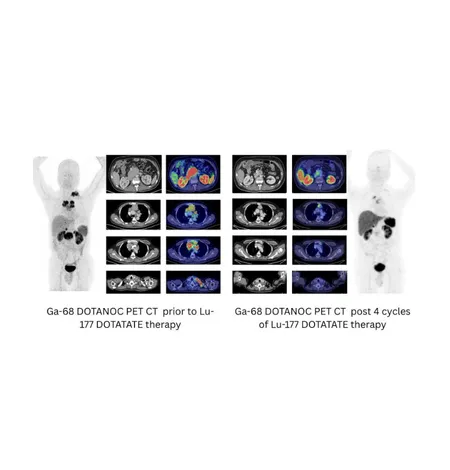
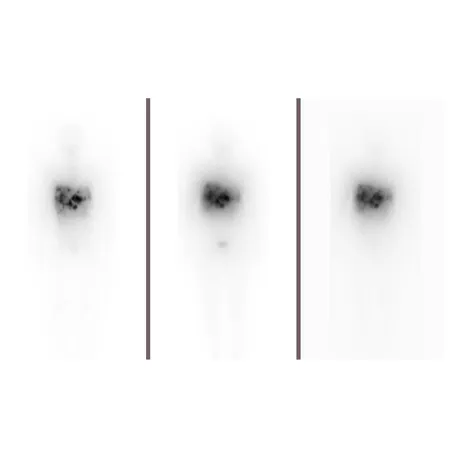
Tracer avid retroperitoneal, mediastinal and left supraclavicular lymph nodes, NET PET score:2. Patient received 200mCi of 4 cycles of Lu-177 DOTATATE therapy 8 weeks apart.
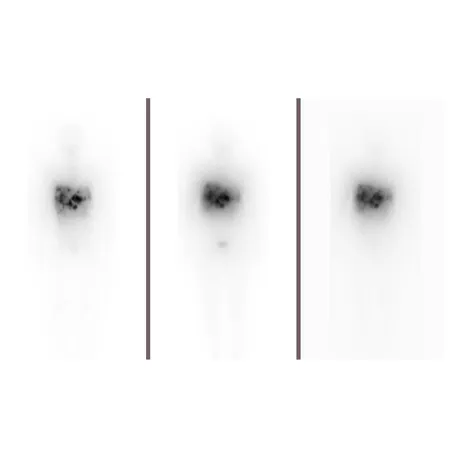
Pre and post therapy Ga-68 DOTATATE PET CT showing favourable response to treatment with greater than 80 percent decrease in tumor volume. Patient is doing well on subsequent follow-up
Our Expert Doctors

Dr. Gayana Shankaramurthy
