
Theranostics in Prostate Cancer
Targeted PSMA imaging and therapy for advanced prostate cancer.
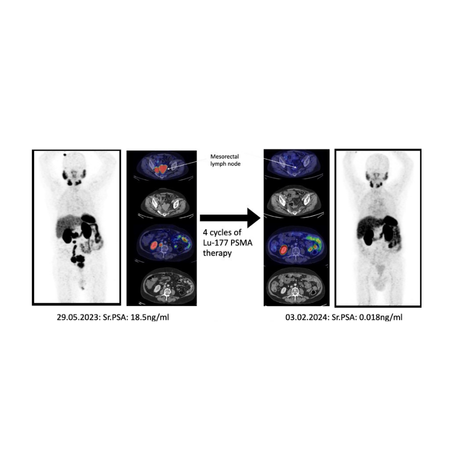
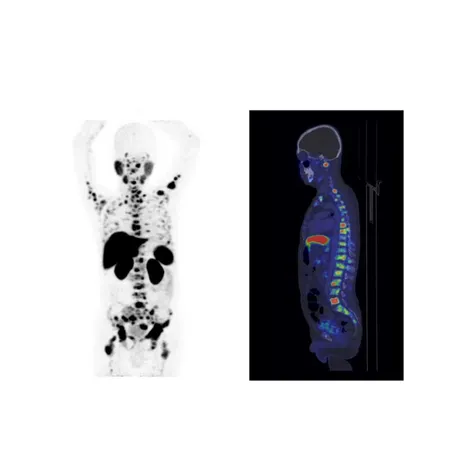
What is Theranostics?
Theranostics is a cutting-edge approach in medicine that combines diagnostics and therapeutics using the same molecule. In simple terms
A special radioactive tracer is used to image cancer cells
If those cells light up on a scan, a closely related therapeutic molecule with a stronger radioactive payload is used to treat the cancer
This “see what you treat” strategy allows targeted delivery of radiation directly to cancer cells while minimizing damage to healthy tissues
This approach is particularly impactful in prostate cancer through PSMA-targeted imaging and therapy
What is Lu-177 PSMA Therapy?
Prostate cancer cells often produce high levels of a protein called Prostate-Specific Membrane Antigen (PSMA) on their surface. Theranostics leverages this by
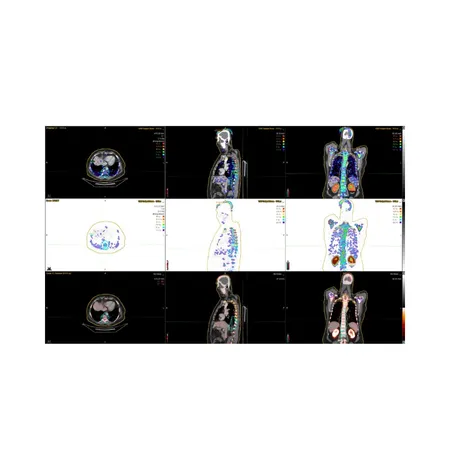
Using Gallium-68- PSMA PET scans to locate PSMA-expressing tumors
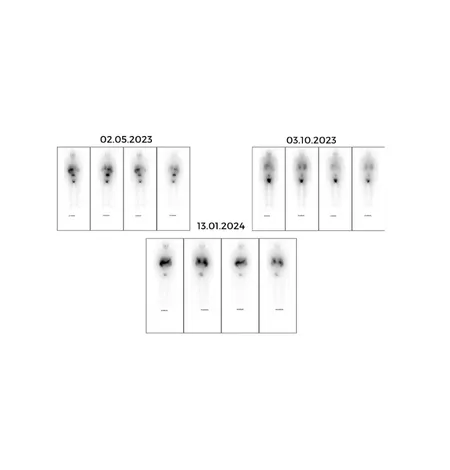
If the tumor lights up, a therapeutic agent — Lutetium-177 -PSMA (also called lutetium-177) — is administered to deliver targeted radiation directly to those cancer cells
Lu-177 emits beta particles, which travel only a short distance, limiting collateral damage while delivering lethal radiation to tumor cells.
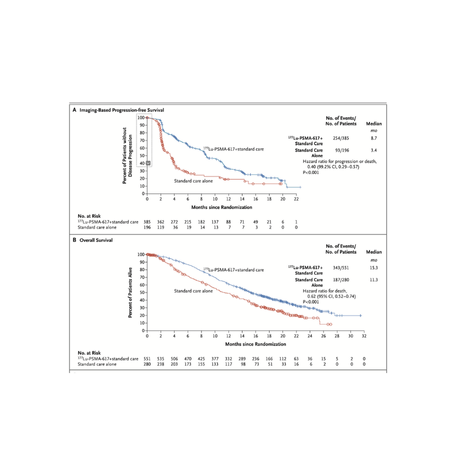
Landmark Clinical Trials ( Vision trial, Phase III)
Theranostics for Lutetium-177 PSMA has rapidly evolved due to several key clinical trials. These trials have established its safety, effectiveness, and expanded role in metastatic prostate cancer
Design: A large, international, randomized, open-label phase III trial in men with PSMA-positive metastatic castration-resistant prostate cancer (mCRPC)
Results: Adding 177-Lu-PSMA-617 significantly improved imaging-based progression-free survival (rPFS) and overall survival (OS) compared with standard care alone
Impact: This trial was pivotal in regulatory approval (e.g., FDA approval of Pluvicto) and established Lutetium-177 PSMA as a new standard in PSMA-positive mCRPC
Landmark Clinical Trials- TheraP Trial (Phase II)
Theranostics for Lutetium-177 PSMA has rapidly evolved due to several key clinical trials. These trials have established its safety, effectiveness, and expanded role in metastatic prostate cancer.
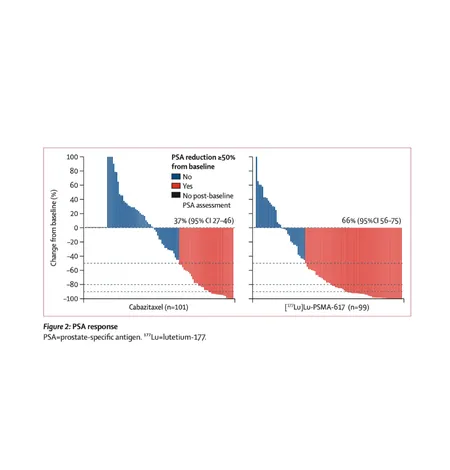
Design: Compared 177-Lu-PSMA-617 with cabazitaxel chemotherapy in men with mCRPC after taxane chemotherapy.
Outcomes: Showed a higher PSA response rate with Lutetium-177 PSMA and helped validate its efficacy in advanced disease
https://doi.org/10.1016/S0140-6736(21)00237-3
Landmark Clinical Trials--PSMAfore and PSMA-Directed Trials
Theranostics for Lutetium-177 PSMA has rapidly evolved due to several key clinical trials. These trials have established its safety, effectiveness, and expanded role in metastatic prostate cancer.
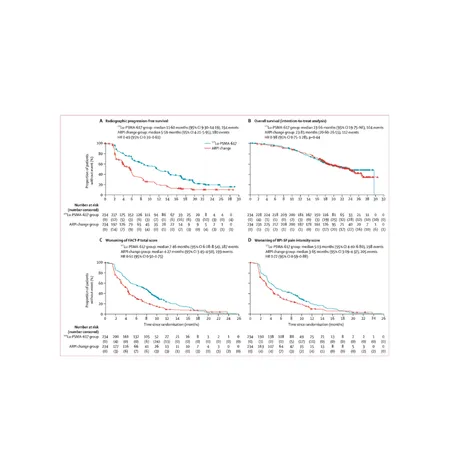
PSMAfore: Explored 177-Lu-PSMA in patients with prior androgen receptor pathway inhibitor (ARPI) but before taxane chemotherapy, showing strong benefits in rPFS
Other PSMA-based RLTs: Variants like 177-Lu-PSMA-I&T have also shown promising outcomes in rPFS in later stage trials (e.g., ECLIPSE)
https://doi.org/10.1016/S0140-6736(24)01653-2
Landmark Clinical Trials- ENZA-p (Phase II Combination Trial)
Theranostics for Lutetium-177 PSMA has rapidly evolved due to several key clinical trials. These trials have established its safety, effectiveness, and expanded role in metastatic prostate cancer
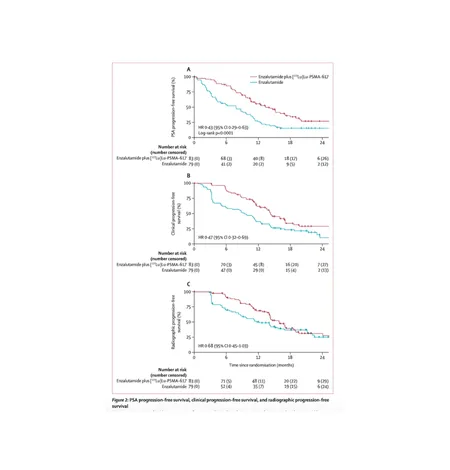
Concept: Combines 177-Lu-PSMA-617 with enzalutamide (an androgen receptor inhibitor) to assess whether pairing PSMA radiotherapy with hormonal therapy improves outcomes.
Interim Analyses: Indicate improved PSA progression-free survival compared with enzalutamide alone, suggesting synergistic effects
https://doi.org/10.1016/S1470-2045(24)00135-9
Why Theranostics Matters
Unlike traditional chemotherapy or external beam radiation, Lutetium-177 PSMA therapy
Targets only PSMA-expressing cells
Spares healthy tissues
Improves survival and quality of life
Uses advanced imaging to ensure the right people get the right therapy
In essence, it brings personalized radiation precision to systemic disease
Terbium-161 -What’s New in Theranostics, Beyond Lutetium-177
Theranostics continues to evolve. Researchers are exploring novel radiotracers that may offer even greater effectiveness
Terbium-161 -Emits beta and auger electrons with high tumor-killing potential.
Because of its emission characteristics, it may cause more lethal DNA damage within the tumor while conserving healthy tissue
161-Tb retains imaging capability (gamma emission) for tracking treatment response
VIOLET Trial: https://doi.org/10.1016/S1470-2045(25)00332-8
Actinium-225
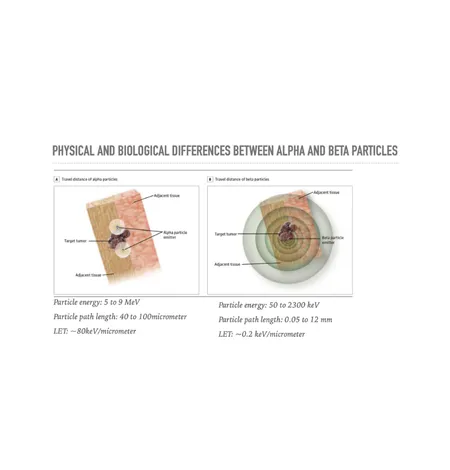
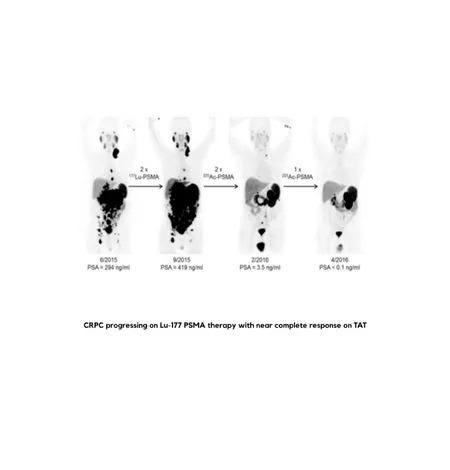
A targeted alpha therapy (TAT) agent that releases alpha particles, which have
Very high energy transfer
Short path length (micrometers)
These properties lead to potent, localized tumor cell killing and minimal collateral damage
Tumors with micrometastatic disease
Radioresistant disease
Potentially deeper and more lasting tumor cell death
Actinium-225-PSMA radioligand therapy of metastatic castration-resistant prostate cancer (WARMTH Act): a multicentre, retrospective study
Our Expert Doctors
About Doctor

Dr. Gayana Shankaramurthy
Nuclear Medicine and Theranostics Expert
