
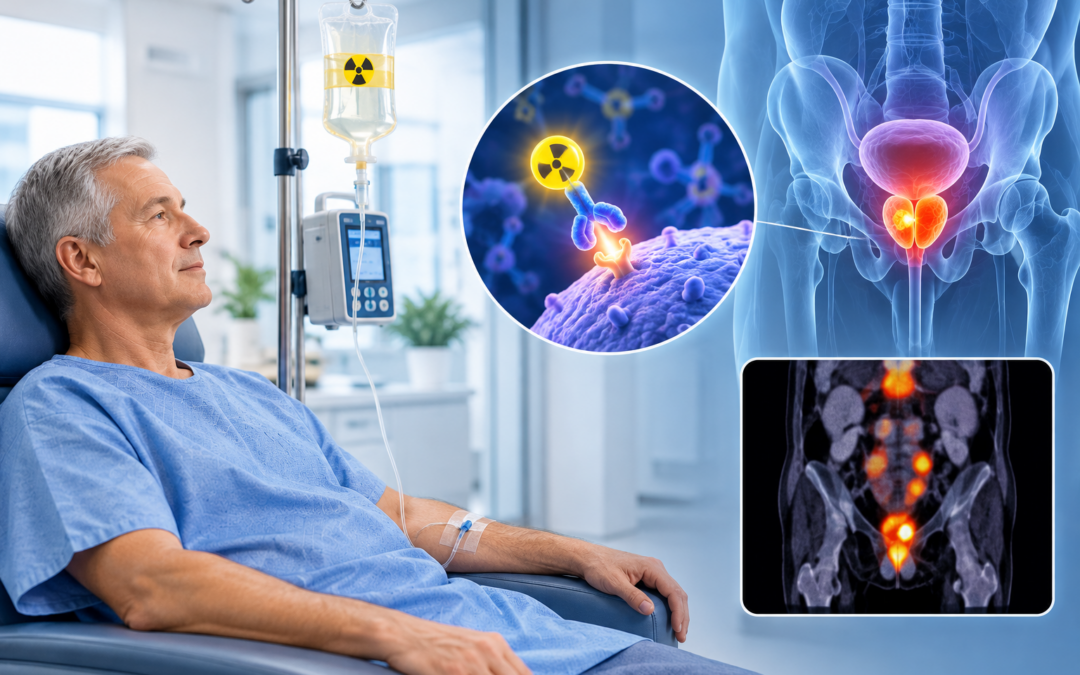
Lu-177 PSMA therapy is a targeted radioactive treatment for prostate cancer that has spread and stopped responding to hormone therapy or chemotherapy. A radioactive molecule seeks out PSMA, a protein on cancer cells, and delivers radiation directly to them while sparing healthy tissue. It’s given as an outpatient infusion, usually four to six cycles spaced six weeks apart. For men who’ve exhausted standard options, it can meaningfully extend survival.
According to Dr. Gayana Shankaramurthy, an expert Nuclear Medicine Specialist at KIMS Hospitals, Bengaluru, most patients arriving for this treatment have already tried hormone therapy, chemotherapy, or both. “PSMA therapy isn’t a first-line treatment, and it shouldn’t be,” she explains. “It targets the cancer cells specifically once other options have run their course, usually with side effects that are far easier to tolerate than chemotherapy.” Patients considering Lu-177 PSMA therapy often find the outpatient format makes a real difference to daily life.
How Does Lu-177 PSMA Therapy Work?
The treatment depends entirely on the cancer expressing enough PSMA, which is why it’s never the very first step
Step one is a PSMA PET/CT scan. Before any treatment begins, a diagnostic scan confirms whether the cancer cells actually carry enough PSMA to respond. Not every patient qualifies. In the pivotal VISION trial, about 87% of screened patients tested PSMA-positive on imaging.
Step two is the targeted infusion itself. Once eligibility is confirmed, Lu-177 PSMA-617 is given intravenously. The radioactive component binds to PSMA on cancer cells and delivers localized radiation over several days as it decays.
Step three is response monitoring. PSA levels and imaging get tracked between cycles to see how the disease is responding, and the plan adjusts from there.
Here’s how it compares with other treatment options for advanced prostate cancer:
|
Treatment |
How It Targets Cancer |
Typical Side Effects |
|
Lu-177 PSMA Therapy |
Binds directly to PSMA-positive cancer cells |
Fatigue, dry mouth, mild blood count changes |
|
Chemotherapy |
Affects rapidly dividing cells, cancerous and healthy |
Nausea, hair loss, broader systemic fatigue |
|
Hormone Therapy |
Blocks testosterone that fuels cancer growth |
Hot flashes, reduced bone density, fatigue |
Considering Lu-177 PSMA therapy for yourself or a family member? Book a consultation.
Who Qualifies for Lu-177 PSMA Therapy?
Eligibility isn’t automatic. A few clinical boxes need checking first.
PSMA-positive disease has to be confirmed through a PSMA PET/CT scan. Cancer with little or no PSMA expression won’t respond well, no matter how advanced it is.
Prior treatment history matters too. It’s typically reserved for metastatic castration-resistant prostate cancer that has already progressed on androgen-receptor therapy and chemotherapy.
Organ function needs to sit within a safe range, particularly kidney and bone marrow function, since the treatment clears through the kidneys.
Life expectancy and performance status also factor in. Patients need to be well enough to tolerate outpatient infusions and follow-up monitoring across several cycles.
Working out whether someone is a candidate takes a close look at scan results alongside treatment history, which is best done through a direct consultation . If you’re new to PET imaging, you can start by learning more about what a whole-body PET scan detects.
Why Choose Dr. Gayana Shankaramurthy for Lu-177 PSMA Therapy?
Dr. Gayana Shankaramurthy has treated over 1,000 patients with advanced theranostic procedures, including Lu-177 and Ac-225 PSMA therapy. She serves as Director of Nuclear Medicine and Theranostics at KIMS Hospitals, Bengaluru. She has also been involved in developing isolation ward facilities for radionuclide therapy. Her training includes an MD in Nuclear Medicine from PGIMER Chandigarh, along with FEBNM (Barcelona) and MICNM credentials. Her approach keeps the diagnostic scan and the therapy under one specialist, so patients aren’t shuttled between separate teams for a process that depends on both being closely coordinated. To find out whether this treatment could help, call 7483160232.
Frequently Asked Questions
Is Lu-177 PSMA therapy painful?
No, it’s given as an outpatient IV infusion with minimal discomfort.
How many cycles are typically needed?
Usually four to six cycles, spaced about six weeks apart.
What are the common side effects?
Fatigue, dry mouth, nausea, and temporary changes in blood counts.
Is Lu-177 PSMA therapy a cure?
It controls advanced disease and extends survival; it isn’t typically curative.
References:
- Gorrepati R. VISION trial: 177Lu-PSMA-617 for progressive metastatic castration-resistant prostate cancer. Indian Journal of Urology, National Institutes of Health, PMC. https://pmc.ncbi.nlm.nih.gov/articles/PMC8555571
- Chandran E, Figg WD, Madan R. Lutetium-177-PSMA-617: A Vision of the Future. National Institutes of Health, PMC. https://pmc.ncbi.nlm.nih.gov/articles/PMC8890398
Disclaimer:This blog is for educational purposes only and isn’t a substitute for professional medical advice.