

An unclear or unexpected PET CT result can leave patients wondering what it means for their care. A second opinion for a PET CT scan may help when findings conflict with other tests or could influence decisions about surgery, treatment, or suspected recurrence.
Dr. Gayana Shankaramurthy, a highly regarded expert in Nuclear Medicine & Theranostics in Bangalore, says, “A useful second opinion goes beyond reading the report. Reviewing the original images alongside pathology, previous scans and treatment history helps clarify uncertain findings and assess whether they could change the next care decision.”
At World of Theranostics, Dr. Gayana Shankaramurthy offers specialist PET CT interpretation to support informed treatment discussions. This blog explains when an additional review may be useful, which records to provide, and how the findings can guide the treating team.
What Does a Second Opinion for a PET CT Mean?
A second opinion is an independent interpretation of an existing PET CT examination. The reviewer assesses tracer uptake, anatomical changes, image quality and comparisons with earlier scans.
The review also considers pathology, symptoms and treatment history. Its findings may agree with the original report or explain an alternative interpretation.
Does the report leave an important question unanswered? Let’s discuss where another interpretation may help.
Why Might You Need a Second Opinion on a PET CT Scan?
Patients may seek a review when:
- Findings appear inconsistent with other investigations.
- The report contains uncertain or indeterminate conclusions.
- An unexpected finding could change treatment.
- The distinction between inflammation and active cancer remains unclear.
FDG uptake can occur in cancer, inflammation and infection, so increased activity requires careful interpretation.
Uncertainty deserves a focused assessment. Reach out today to discuss the finding that concerns you.
Is a major care decision approaching? Let’s explore when a review may be timely.
When Should You Consider a PET CT Second Opinion?
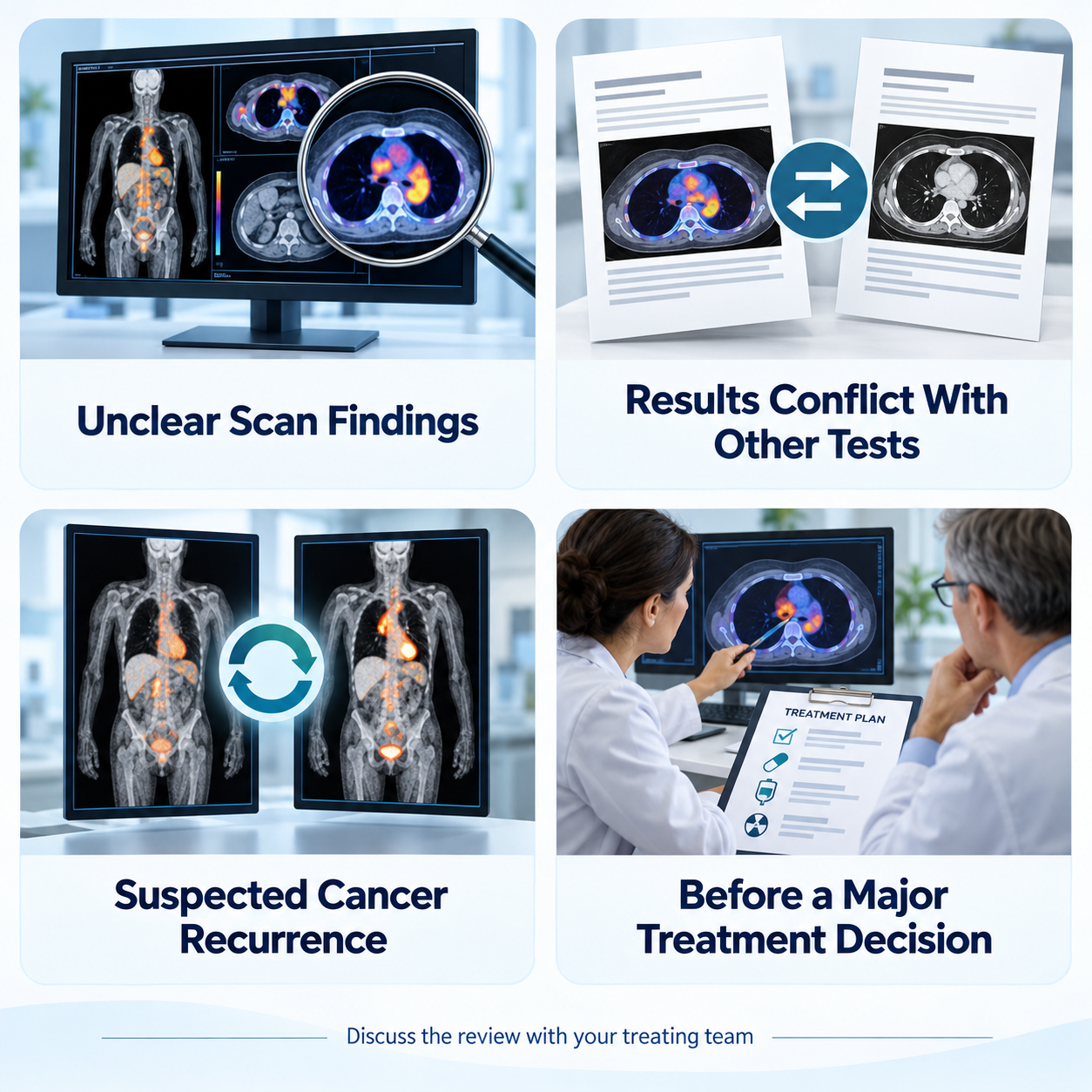
Consider discussing a second opinion before surgery, a substantial treatment change or an invasive investigation prompted by an uncertain result. It may also help when suspected recurrence conflicts with symptoms, tumour markers or previous imaging.
Ask the treating team whether the review could answer a specific question. Urgent care should continue according to their advice.
Could another interpretation affect the next step? Let’s examine the possible outcomes.
Can a PET CT Second Opinion Change Your Diagnosis or Treatment Plan?
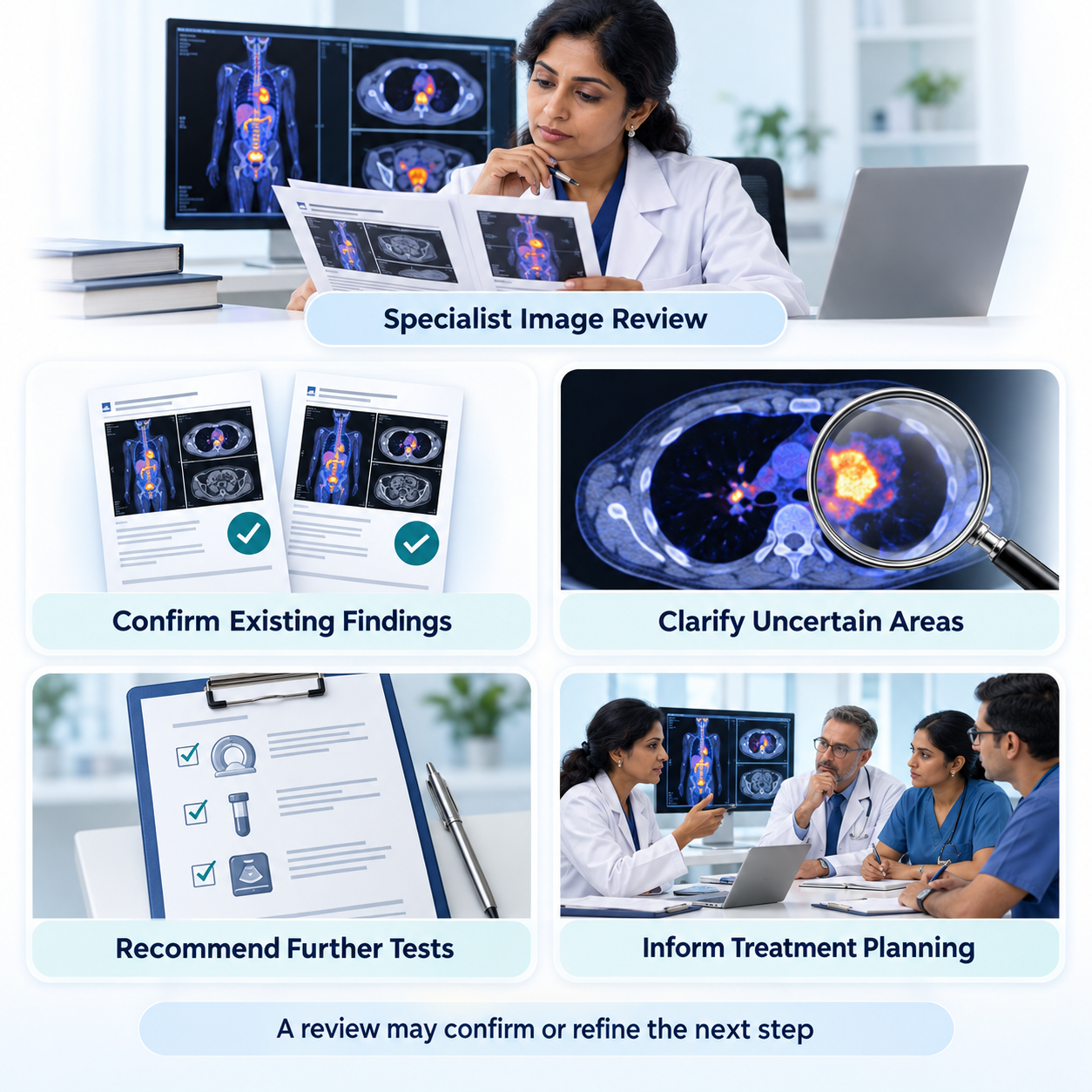
A second opinion may confirm the existing plan or recommend clarification of a finding. In selected cases, differences in interpretation can affect staging, the assessment of treatment response or the choice of further tests.
However, a revised imaging opinion does not automatically establish a new diagnosis. Biopsy, additional imaging or multidisciplinary discussion may still be needed.
Would reviewing the images require another scan? Let’s compare these two approaches.
PET CT Second Opinion vs Repeat PET CT Scan: What Is the Difference?
|
Second opinion |
Repeat PET CT |
|
Reviews images already acquired |
Produces new images |
|
Adds no radiation from scanning |
Involves another tracer administration and CT exposure |
|
Clarifies interpretation |
Assesses current disease status or addresses technical limitations |
A repeat scan may be appropriate if the earlier examination is inadequate, outdated for the clinical question, or unable to answer it.
What expertise should the reviewer have? Let’s discuss the qualifications relevant to interpretation.
Who Should Review Your PET CT for a Second Opinion?

Choose a nuclear medicine physician or appropriately trained nuclear radiologist with experience in PET CT and the condition being assessed. Familiarity with the tracer used is also important.
An Expert in Nuclear Medicine & Theranostics can assess functional imaging alongside clinical records and explain the limitations of the examination.
Have you gathered everything the reviewer needs? Let’s check the essential records.
What Documents and Scan Files Are Needed for a PET CT Second Opinion?
Usually, patients should provide:
- Complete PET and CT images in DICOM format
- The original written report
- Earlier scans and their reports
- Biopsy or pathology results
- Treatment details and dates
- Relevant blood tests and the referral question
DICOM files contain the full imaging study. Screenshots and report photographs alone may be insufficient for comprehensive interpretation. Sharing previous images also supports comparison and may prevent duplicated examinations.
Can the scan be reviewed without travelling? Let’s explore the usual remote process.
How Does an Online PET CT Second Opinion Work?
Patients first contact the service, explain their concern, and receive instructions for sharing images securely. After the files and records are checked, a specialist reviews the examination.
The recommendations are provided with the report, either electronically, or with a video consultation where appropriate. It is important to confirm how you will provide the documents and consultation cost involved.
For information about a PET CT Scan in Bangalore, patients can review the service details.
Which interpretation should guide care when reports differ? Let’s discuss the next practical step.
What Happens If the Second Opinion Differs From the First PET CT Report?
Share both reports with the treating doctor. The teams may compare the images directly and discuss the specific point of disagreement.

Differences can arise from available clinical information, interpretation of uptake or comparison with older studies. The next step may be a consensus review, targeted investigation or biopsy.
Could a finding affect the extent of cancer being treated? Let’s explore the relevance of a focused review.
Is a PET CT Second Opinion Useful for Cancer Staging and Treatment Planning?
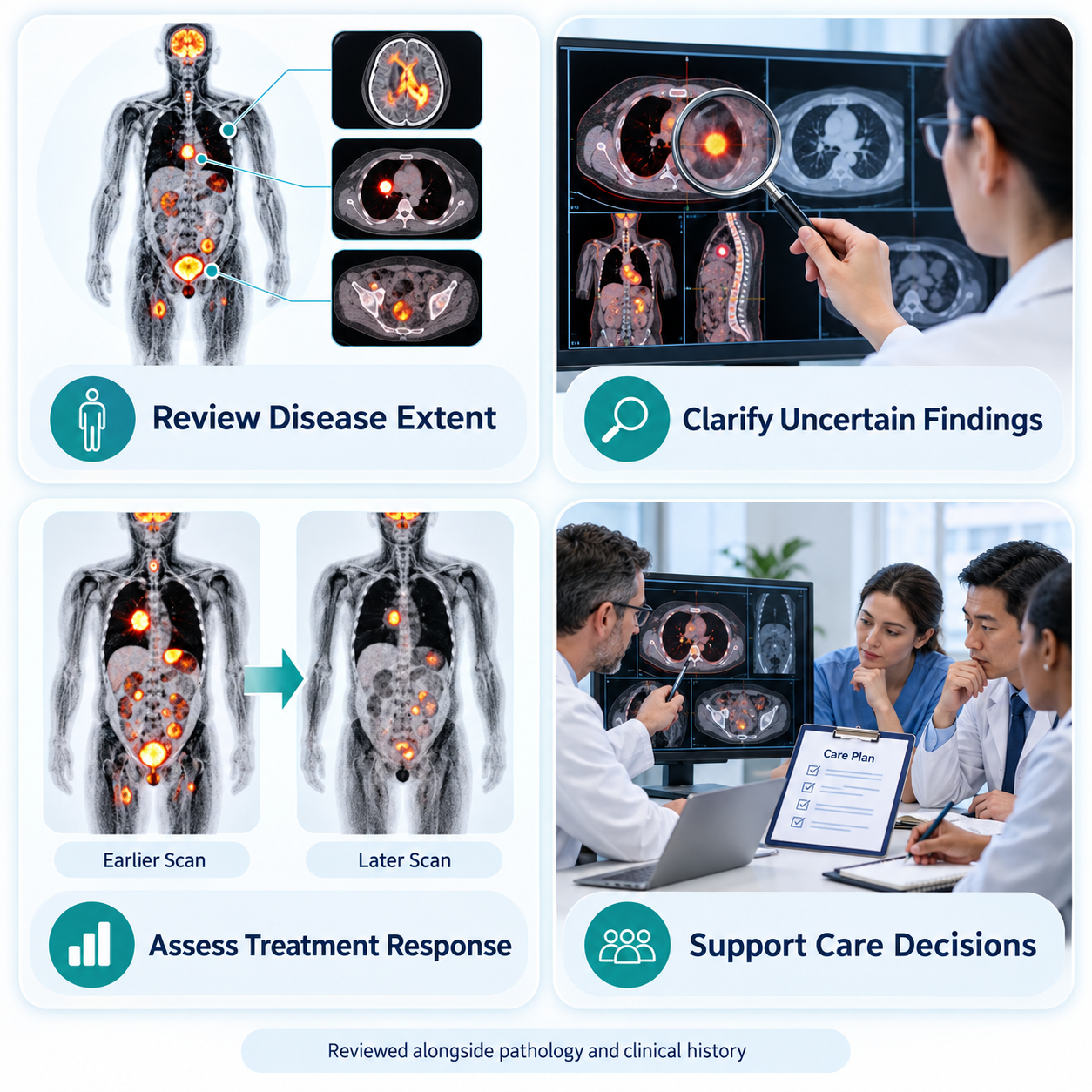
PET CT can contribute to assessing disease spread, treatment effectiveness, and possible recurrence. A second interpretation may help when one uncertain site could materially affect staging or treatment intent.
Its usefulness depends on the type of cancer, tracer, and available evidence. Imaging is still an element in overall assessments, including pathology.
Knowing the timeline helps coordinate treatment discussions. Connect with a specialist and confirm report availability beforehand.
Does every report need another interpretation? Let’s consider when additional review adds value.
Is a Second Opinion Necessary for Every PET CT Scan?
A second opinion is optional when the findings are clear, clinically consistent and adequately explained. It becomes more useful when a specific uncertainty remains or a significant decision depends on a disputed finding.
Start by asking the treating doctor to explain the original report. That conversation may resolve the concern without another review.
Frequently Asked Questions
May I get a second opinion for my case already in treatment?
Yes. Provide dates of the treatment you have received and specify what kind of review you want: initial staging or later response assessment.
Is the written PET CT report enough?
It might be useful during your consultations, but a comprehensive second opinion usually needs complete original imaging data.
Can a second opinion confirm that a hotspot is cancer?
In some cases, it may either increase or lower the suspicion. Even an imaging may be insufficient for the purpose.
Does increased SUV level means there is cancer?
No. SUV represents the level of tracer accumulation and should be combined with its uptake pattern, normal anatomy and other factors.
Would a second opinion necessarily modify my treatment?
No. Second opinion may confirm original findings and support continuing your treatment.
How much does a PET CT second opinion cost?
Fees vary with the service and review requirements. Confirm whether the price includes a written report and consultation.
How to make a request for second opinion through World of Theranostics?
Please contact our team for details about scheduling an appointment, sending imaging, payment and time of review.
Reference links:
https://www.radiologyinfo.org/en/info/article-your-medical-images
https://www.radiologyinfo.org/en/info/pet
Disclaimer: The information shared in this content is for educational purposes and not for promotional use.